Noriko Ambe


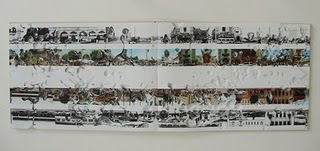
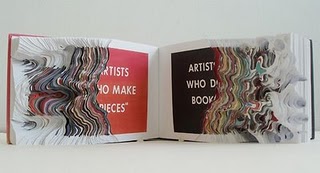
There have been quite alot of artists lately who alter books through cutting. I like this series by Noriko Ambe because it not only seems to be about the look of the pieces but takes the cutting a step further into self-investigation. This altering of Ed Ruscha's book illustrates, to me, an artist who is both acknowledging the historical significance of Ed Ruscha's work in the book format as well as challenging it. You can see more of her work here.

Her work is also on view right now with other "cutters" at the Bellevue Arts Museum as part of an exhibition called The Book Borrowers: Contemporary Artists Transforming the Book.

Brian Belott


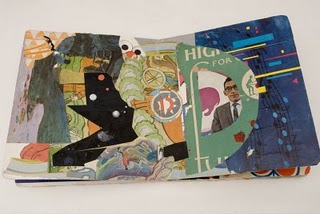
I love this work by Brian Belott. See more of his work here

All I need in life are page by page shots of artist's books on the web. That's really what does it for me.

Founding Father's Altered Text


When I heard this Fresh Air episode about religion and the Founding Fathers, I was blown away to hear about Thomas Jefferson physically cutting out passages from the Bible and pasting them into a new blank book--recreating the text as to how he thought it should read. Many book artists do exactly this. Their medium is book and text. Jefferson's Bible reminded me first of the most well-known example of what is called an "altered text": A Humument by Tom Philips. In that work, the artist drew on and blocked out words in a victorian novel so that a new narrative emerged.

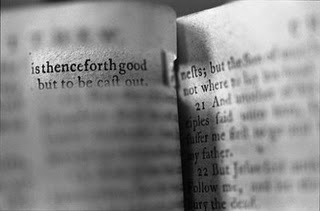
I went on a hunt to find images of the Jefferson Bible and was AGAIN blown away to see these stunning pictures from Alexandria Searls, a photographer who beautifully captures Jefferson's actual cut-up Bibles which are preserved (thank goodness) at his home in Monticello. I haven't found any images yet of the book in which he pasted the passages, though I believe he did publish his version of the Bible which you can now purchase via Amazon. of course.

You can see the full exhibit of Alexandria Searls' photographs of the cut-up Bible at the Monticello website. Alexandria graciously allowed me to publish a few here on the blog.

Just came across this other blog post on more cut-up texts http://blog.whitneyannetrettien.com/2009/03/thomas-jefferons-cut-up-bible.html. cool.
Sewn Boards Binding


These are images from the first sewn boards binding I completed a few years ago. Gary Frost developed this structure and it is incredibly beautiful both in the way it functions and its clean aesthetic. The boards are made from a stiffer, 20 pt card that are folded and sewn on just like another signature in the book (this is what you see as tan in the above photos). Once the textblock is completely sewn, you can insert another stiff card in the folio (this is the black area inserted between the tan sections). These three layers act as the boards for the book, which is then covered with three separate pieces of either paper/cloth/leather.

I believe the original structure was developed as a conservation binding, to re-sew and preserve older books. But Gary Frost also mentions that it is a good structure for edition binding. You can read more about this binding at Gary Frost's website.